
If you’ve been thinking about straightening your smile, there’s a good chance Invisalign has crossed your mind. And one of the first questions you’ll likely ask is, quite naturally, how long does Invisalign take to work?
The honest answer is that it depends on you. Your teeth, your bite, your goals and how closely you stick to the plan all play a part. What we can do is walk you through what’s typical for mild, moderate and complex cases, drawing on published clinical research and the standard Invisalign provider protocol.
How Invisalign Actually Works
Invisalign uses a series of custom-made, virtually invisible trays that gently shift your teeth into a planned position. You wear each set for roughly one to two weeks, then swap to the next, with each aligner moving teeth a fraction of a millimetre at a time, following a digital treatment plan. The British Orthodontic Society describes aligners as thin, clear, flexible ‘mouthguards’ that fit closely over the teeth and shift them incrementally according to a personalised plan.
For the trays to do their job, they need to be in your mouth for 20 to 22 hours a day, leaving a window for meals, drinks (other than water) and your usual oral hygiene routine. Compliance with this wear time is the single biggest factor in keeping treatment on track.
For a wider look at the various ways we can straighten teeth, our teeth straightening page is a useful place to start.
How Long Does Invisalign Take to Work? The Short Answer
Most patients complete their Invisalign treatment within 6 to 18 months, which is the range we share with patients during consultations at Muse Dental. Straightforward cases finish sooner; more involved ones can stretch closer to two years. A 2024 survey of British Orthodontic Society members in the Journal of Orthodontics reported a mean treatment duration of around 22.8 months across an average of 64 aligners per patient, weighted towards specialist orthodontic practice and complex cases, so this sits at the upper end of typical experience.
Here’s how treatment time typically breaks down by case complexity:
| Case Type | Typical Treatment Time | What It Treats |
| Mild | 3 to 6 months | Minor crowding, small gaps, slight relapse after previous orthodontic work |
| Moderate | 6 to 12 months | More noticeable crowding or spacing, mild bite issues |
| Complex | 12 to 24 months | Significant crowding, deep bites, rotations, larger gaps and combined concerns |
These ranges reflect the main Invisalign treatment packages (Express, Lite, Moderate and Comprehensive) used by UK providers. Your own timeframe can only be confirmed during a consultation, once we’ve taken a digital scan and built your personalised plan.

Mild Cases: 3 to 6 Months
Mild cases are the quickest to treat and often involve a single tooth that’s drifted, a small gap between front teeth, or some long-standing minor crowding.
For these, shorter Invisalign treatment options such as Invisalign Express or Invisalign Lite are often appropriate. They use a smaller number of aligners and focus on cosmetic-led movement at the front of the mouth.
What you can typically expect:
- A reduced number of aligners compared with comprehensive treatment
- Visible progress within the first few weeks of consistent wear
- Fewer adjustments along the way
- A typically lower fee, though pricing varies by clinic and case
If your concerns are mainly aesthetic and your bite is largely sound, this is often a route worth discussing at consultation.
Moderate Cases: 6 to 12 Months
A larger group of patients fall into the moderate bracket, which covers more pronounced crowding, multiple gaps, mild overbite or underbite, and uneven spacing. If you’re specifically wondering about bite correction, our piece on whether Invisalign can fix an overbite is a helpful read.
Invisalign Lite is frequently used for moderate cases, while slightly more involved presentations may call for Invisalign Comprehensive (sometimes referred to as Invisalign Full).
A few things worth knowing about moderate treatment:
- You’ll usually need small tooth-coloured attachments bonded to specific teeth, which help the aligners grip and apply pressure in the right direction.
- Some patients benefit from interproximal reduction, a gentle reshaping of the enamel between teeth to create space.
- Check-ups are typically scheduled every 6 to 8 weeks, in line with our standard Invisalign protocol.
Complex Cases: 12 to 24 Months
Complex cases call for more time, more aligners and a more detailed plan. They include significant crowding, large gaps, deep overbites, crossbites, open bites, severely rotated teeth, or combinations of these.
Invisalign Comprehensive is the package most commonly prescribed for these cases, allowing for unlimited aligners across the treatment period and the flexibility to refine the result as your teeth respond.
Complex treatment can involve:
- 30 or more aligners across the course of treatment
- Multiple attachments, and in some cases elastics, to assist with bite correction
- One or more refinement stages, where additional aligners are made once the initial series is complete
- A treatment window that can extend beyond 18 months
Not every complex case is best suited to clear aligners. A 2024 narrative review on clear aligner therapy sets out specific contraindications, including crowding or spacing greater than 5 mm, severely rotated teeth (more than 20 degrees) and certain bite patterns. In these situations, traditional braces may be the more appropriate option, and we would discuss that openly with you during your assessment.
Invisalign at Muse Dental
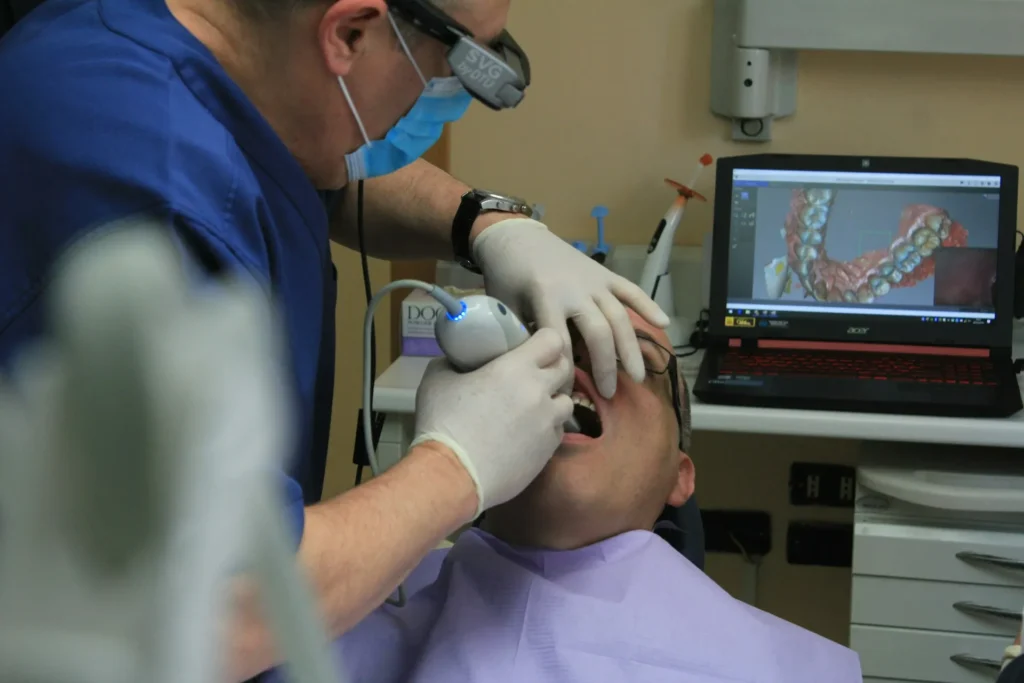
Timeframes only become real once your teeth have been assessed in person, and that’s where our Invisalign consultation comes in.
You’ll start with a comprehensive consultation and a digital scan, which we use to build a 3D treatment plan tailored to your case. From there, we’ll talk you through which Invisalign package suits your needs, the expected number of aligners, the projected timeframe, and the total fee, all before you commit. If clear aligners aren’t the right fit, we’ll say so and walk you through the alternatives, including fixed braces.
Throughout treatment, you’ll wear each aligner for one to two weeks and visit us every six to eight weeks for a quick progress check. As a CQC-registered practice with GDC-registered clinicians, we follow established Invisalign provider protocols at every stage.
Ready to find out exactly how long Invisalign would take for your smile? Book your Invisalign consultation at Muse Dental, and we’ll give you a personalised timeframe based on your teeth, not an average.
What Affects Your Treatment Time?
Two patients with similar-looking smiles can finish Invisalign months apart. Several factors explain why.
Your Compliance
A 2025 systematic review on Invisalign predictability found that only around 36% of patients fully comply with the recommended wear time of 22 hours or more per day, and that inadequate wear time directly impacts whether predicted tooth movements are achieved. If your aligners are out of your mouth for significantly longer than the recommended two to four hours daily, the steady pressure on your teeth is reduced, and treatment is more likely to take longer than planned.
Your Age
Adolescents and younger adults often respond more quickly to tooth movement, since alveolar bone tends to remodel more readily during periods of growth. Mature bone is denser, so movement may happen at a slightly slower pace in older adults. Both groups can achieve good outcomes; the timeline simply tends to differ.
The Type and Severity of Movement Needed
Published clinical research on clear aligner therapy suggests that simple movements such as tipping a tooth forward or backwards are more predictable than rotation, intrusion or extrusion, particularly with conically shaped teeth like canines and premolars. The more of these less-predictable movements your case requires, the longer treatment may take.
How Often You Attend Check-Ups
Skipping or rescheduling appointments adds up. Check-ups confirm your teeth are tracking with the digital plan and catch any issues early, when they’re simpler to correct. Maintaining good oral health throughout treatment, including regular hygiene appointments, is generally encouraged, since gum inflammation can delay tooth movement.
What Happens After You Finish?
Once active treatment ends, you’ll move on to retainers. The British Orthodontic Society notes that, without retention, teeth tend to drift back towards their pre-treatment positions over time. Retainer wear is typically long-term, and your dentist or orthodontist will recommend a regimen suited to your case at the end of treatment.
Practical Tips for Your Invisalign Treatment
A few simple habits make a real difference:
- Set a routine. Pop your aligners in straight after meals to hit the daily wear target.
- Keep your aligners clean. Rinse them when they come out and brush gently with a soft toothbrush. Avoid hot water, which can warp the plastic.
- Brush and floss thoroughly. Trapped food under aligners increases the risk of decay, so good hygiene matters more during treatment, not less.
- Carry your case with you. Wrapping aligners in a napkin is a common way to lose them.
- Stay in touch. If a tray won’t seat properly or an attachment comes loose, contact the practice. Smaller course corrections are simpler than larger ones.
Ready to Find Out More?
The honest answer to how long Invisalign take to work is that it depends on the complexity of your case, the package prescribed, and your wear-time consistency. Mild cases can be completed in a few months; complex cases can take up to two years or longer.
What we offer is a structured consultation, a digital scan, and a written treatment plan with a timeframe specific to your case. You can also browse our smile gallery to see results from patients we’ve treated.
If you’d like to take the next step, get in touch to arrange your consultation.
This article is for general information only and does not replace clinical advice. Treatment timeframes, suitability for a particular Invisalign package, and costs vary by case and can only be confirmed after an in-person assessment by a GDC-registered dentist. Tier selection should be made together with a qualified clinician.