
This article is for general information only and should not replace personalised dental advice. Suitability for composite bonding or veneers depends on your oral health, enamel, bite, gum condition, previous dental work and treatment goals.
Many people start by asking which treatment looks better, but the better question is which one suits the tooth underneath. Composite bonding and veneers can both improve the shape, colour and balance of your smile, but they work in different ways.
At Muse Dental, we look at your oral health, bite and smile goals before recommending cosmetic treatment. Your smile should look beautiful, but it also needs to feel comfortable, function well and protect your natural teeth wherever possible.
In this guide, we compare composite bonding vs veneers so you can understand what each treatment involves and which option may be worth discussing at your consultation.
What is composite bonding?
Composite bonding uses tooth-coloured resin to improve the appearance of teeth. The material is applied directly to the tooth, shaped by the dentist, hardened with a curing light and polished for a natural finish.
It is often used for smaller cosmetic changes, such as:
- Minor chips or worn edges
- Small gaps between teeth
- Uneven tooth shapes
- Slightly short or irregular teeth
- Mild discolouration
- Small areas of surface damage
One of the main benefits of bonding is that it is usually minimally invasive. In many cases, little to no natural tooth structure needs to be removed, making it a conservative option when the underlying teeth are healthy.
The General Dental Council highlights the importance of explaining composite bonding clearly, including possible chipping, staining, debonding, loss of lustre and future maintenance. Its guidance on the composite bonding boom is a useful reminder that even conservative cosmetic treatment still needs careful planning and informed consent.
What are veneers?
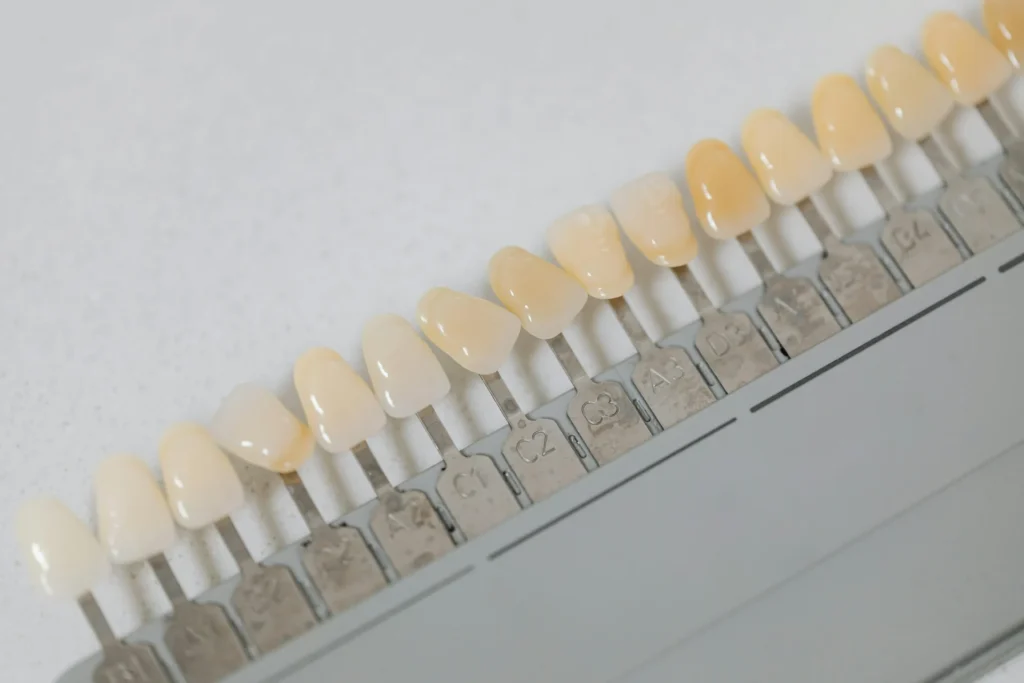
Veneers are thin, custom-made shells bonded to the front surface of the teeth. They are designed to improve colour, shape, size and overall smile balance.
They are commonly made from porcelain, although composite veneers are also available. Our veneers treatment may be considered if you want to improve:
- Deep staining that whitening cannot fully address
- Worn, chipped or uneven front teeth
- Teeth that look too small or narrow
- Small gaps
- Mild irregularity in tooth shape
- The overall symmetry of your smile
Unlike composite bonding, veneers usually involve some preparation of the tooth surface. The Oral Health Foundation explains that a small amount of enamel may be removed from the front of the tooth so the veneer can fit naturally and avoid feeling bulky. Its guide to dental veneers gives a clear overview of the usual fitting process.
Because enamel does not grow back, veneers are usually considered a longer-term commitment.
Composite bonding vs veneers at a glance
| Feature | Composite bonding | Veneers |
| Main material | Tooth-coloured composite resin | Usually porcelain or composite |
| Often used for | Small chips, gaps and subtle reshaping | Bigger changes to colour, shape and symmetry |
| Tooth preparation | Often little to no enamel removal | Usually involves some enamel preparation |
| Appointment time | Often completed in one visit | Usually takes more than one visit |
| Stain resistance | More likely to stain over time | Porcelain is more stain-resistant |
| Repairability | Often easier to repair | May need replacing if damaged |
| Commitment level | Usually more conservative | Usually, a longer-term commitment |
When composite bonding may be worth discussing
Composite bonding may suit people who already like their smile but want to refine a few details. It is often used for careful, natural-looking improvement rather than a complete redesign.
You may want to ask about composite bonding if:
- Your teeth are generally healthy
- You have small chips, gaps or uneven edges
- You prefer a minimally invasive option
- You want to understand a quicker treatment route
- You are happy to maintain the bonding over time
- You understand that composite can stain, chip or lose polish
Composite bonding is particularly useful when we want to preserve as much of the natural tooth as possible. Healthy enamel is precious. Once it is gone, it does not politely grow back like a well-trained houseplant.
If your main concerns are small chips, uneven edges, minor gaps or subtle reshaping, our composite bonding treatment may be a suitable place to start. Visit the page to see how this conservative cosmetic option can help refine your smile without committing to a more extensive treatment straight away.
However, bonding is not suitable for every concern. If teeth are heavily worn, your bite places too much pressure on the front teeth, or there is active decay or gum disease, those issues need to be addressed first. If the gums, enamel or bite need attention first, cosmetic work should wait until the mouth is stable.
When veneers may be considered
Veneers may be discussed when you want a more noticeable change to your smile. They can be helpful when several front teeth need to be improved together for a balanced result.
You may want to ask about veneers if:
- You want to change several visible teeth
- Your teeth have deeper discolouration
- You want to alter shape, size and colour together
- You would like a highly polished, bespoke finish
- You want to discuss a material that resists staining well
- You understand the longer-term commitment involved
Porcelain veneers can create a natural and refined result when they are carefully planned, fitted and maintained. A well-planned result should consider your face, lips, bite and the character of your natural teeth.
A peer-reviewed systematic review on porcelain laminate veneer survival rates found that these restorations can perform well over time when properly planned and maintained, although outcomes vary depending on case selection, material choice and clinical technique.
The key difference: preservation vs transformation
The simplest way to compare composite bonding vs veneers is this:
Composite bonding is often used for conservative refinement. Veneers are often used when a more complete change to tooth shape, colour or symmetry is being considered.
Composite bonding usually adds material to the tooth. Veneers often require the tooth surface to be prepared before the veneer is fitted. That does not make one treatment better than the other. It simply means they suit different situations.
If your main concern is a tiny chip on one front tooth, veneers may be a more involved option than the concern requires. If you want to change the colour, length, width and balance of several teeth, composite bonding may not offer the level of control or longevity you are hoping for.
For patients exploring wider aesthetic options, our guide to cosmetic dentistry options explains how treatments such as whitening, bonding, veneers and straightening may fit together.
What we consider before recommending treatment

Before we recommend bonding, veneers or a wider cosmetic plan, we assess more than the teeth people see in photographs. Your smile is part of a working mouth, so comfort, function and oral health matter as much as appearance.
During a cosmetic consultation, we would usually look at:
- The condition of your enamel and gums
- Your bite and any signs of grinding or clenching
- Tooth wear, shade and smile line
- Previous dental work
- Your expectations and maintenance habits
We would also talk through the likely benefits, limitations, risks, maintenance needs and possible costs before treatment begins, so you can make an informed decision. The GDC’s standards on treatment options and informed consent reinforce the importance of explaining options, risks, benefits and costs clearly.
Cost and long-term maintenance can vary depending on the number of teeth treated, the materials used and whether any other dental care is needed first.
Can composite bonding and veneers be combined?
Yes, they can. A balanced smile plan does not always mean using one treatment across every tooth.
For example, veneers may be used on teeth that need a larger change, while composite bonding may refine neighbouring teeth. Whitening, hygiene care or clear aligners may also be recommended before cosmetic work if they would improve the final result.
If you are considering a fuller change, our smile makeover page can help you understand how different cosmetic treatments may be planned together. You may also want to look through our smile gallery to see examples of treatment outcomes, where appropriate consent has been given.
How to look after bonding or veneers
Whichever option you choose, daily care makes a real difference.
To help protect your results:
- Brush twice daily with fluoride toothpaste
- Clean between your teeth every day
- Attend routine dental and hygiene appointments
- Avoid biting nails, pens, ice or very hard foods
- Wear a nightguard if we recommend one
- Limit frequent staining drinks if you have composite bonding
- Avoid using your teeth as tools, even when a packet refuses to open, like it has a personal grudge
Composite bonding may need polishing, repair or replacement over time, depending on your bite, habits and how the material wears. Veneers should also be checked regularly so we can monitor the margins, bite and surrounding gum health.
So, which is right for your smile?
Composite bonding may be worth discussing if you want a conservative, usually quicker way to improve small imperfections.
Veneers may be worth discussing if you want a more comprehensive change to colour, shape and symmetry, and you are comfortable with a longer-term restorative commitment.
Two people can ask for the same treatment but need very different plans because of enamel thickness, tooth wear, gum health, bite pressure or previous dental work. That is why we recommend an assessment before deciding between bonding and veneers.
Final thoughts
Composite bonding and veneers can both create beautiful results, but the most suitable choice should not be based on trends alone. Trends can be helpful for inspiration, but they should not decide what happens to healthy tooth structure.
If you are comparing composite bonding vs veneers, we would be happy to help you understand your options. Contact our team to arrange a cosmetic consultation and take the next step towards a confident, natural-looking smile.